Child ProtectionCyberbullyingRoblox Ban

Roblox Banned in Turkey Amid Frequent Child Abuse Incidents

roblox被土耳其封禁,儿童侵害事件频发

January 27, 2026
7 views

Summary

This article reports on Turkey’s nationwide ban on Roblox, outlining the legal basis for the access restriction and the regulatory authorities’ stated concerns regarding child protection. It details multiple incidents involving harm to minors linked to the platform, the Turkish regulator’s reasons for intervention, and Roblox’s official response to the ban.

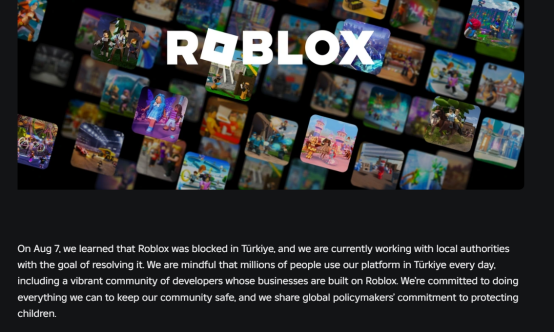
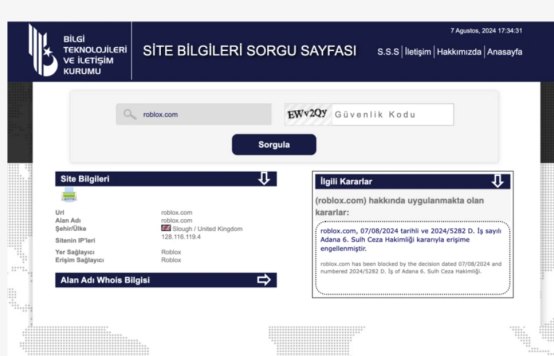
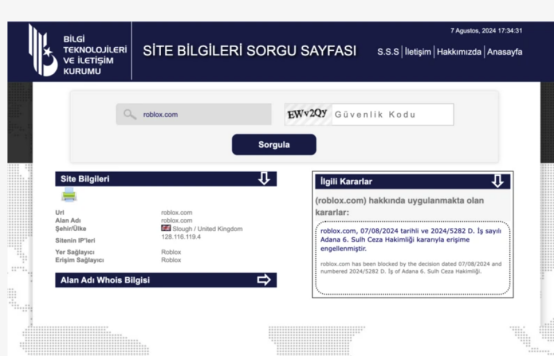
In August 2024, Turkey imposed a nationwide ban on Roblox, citing the platform’s lack of content regulation and safety measures, particularly in its protection of children. The decision was made by the Adana Sixth Criminal and Peace Court in Turkey, which invoked the relevant provisions of Turkey's Internet Governance Law to immediately block access to Roblox and its related websites. Under the law, if a court determines that the content on an online platform is illegal, the Director of the Information Technology and Communications Authority (BTK) has 24 hours to review the decision, and if the decision to ban is upheld, it must be implemented within four hours.
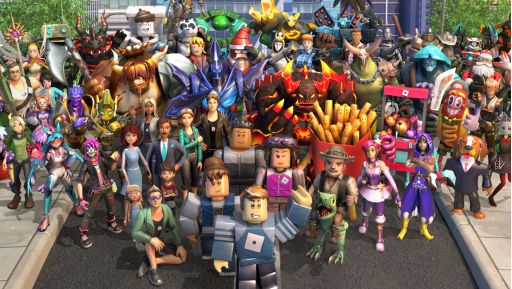
As of Q2 2024, Roblox saw an average of 79.5 million daily users, who spent a collective 17.4 billion hours on the platform. This means each user spends over 200 hours annually on Roblox, equating to approximately 40 minutes each day.

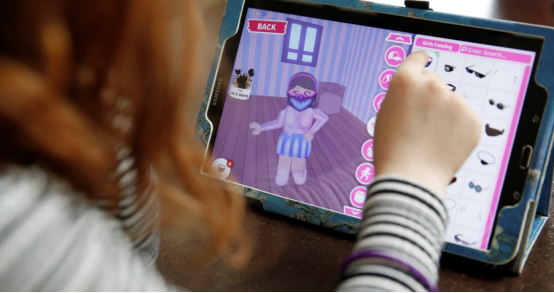
While Roblox offers a fun space for minors to engage in digital games and even learn basic programming, it has also been criticized for exposing them to explicit content, grooming, and cyberbullying. The platform has been widely criticized for failing to address these safety concerns.
In recent years, Roblox has faced mounting criticism regarding its safety record, particularly concerning incidents where criminals used the platform to engage in illegal activities targeting minors. According to data compiled by Bloomberg Businessweek, since 2018, U.S. law enforcement has arrested at least twenty individuals involved in crimes such as kidnapping or abuse of minors they met or groomed through Roblox. Some of these suspects had prior records of sexual offenses or abuse. Among those arrested were a deputy sheriff, a third-grade teacher, and a nurse.

In the past 13 months alone, seven individuals have been arrested, including a Florida man charged with attempting to kidnap a teenager he met while playing Roblox, a New Jersey man accused of kidnapping an 11-year-old girl he met on the platform, and a California man arrested for abusing a child he also met on Roblox. These offenders used Roblox to lure children into sending photos or building relationships with them before moving to other online platforms, eventually meeting offline.

The Information and Communication Technology Authority (BTK) of Turkey stated that one of the main reasons for the ban was the inability to effectively monitor and regulate inappropriate content on Roblox. BTK argued that the platform’s “supervisory mechanisms” were insufficient to address these issues, which led to the decision to implement the ban. A BTK official outlined four key reasons for the ban:

1. Sexual Exploitation

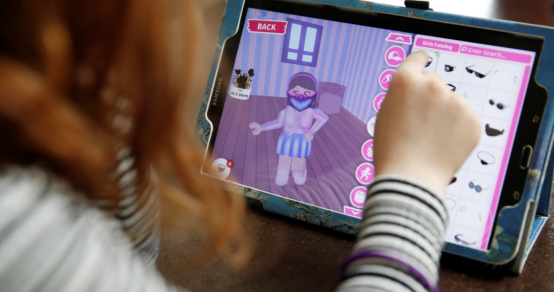
The primary reason for Turkey’s ban on Roblox was reports of sexual exploitation of minors on the platform. Authorities expressed serious concern about the presence of such content and its impact on young users, prompting decisive action to block the platform.
2. Reports of Pedophilia

Another factor was the platform’s virtual gatherings, which were alleged to be gathering places for pedophiles. This was one of the key reasons for Turkey’s decision to block access to Roblox.

3. Virtual Currency Incentives for Children

BTK also highlighted concerns regarding Roblox’s virtual currency, Robux. Reports showed that bot accounts were distributing Robux to encourage children to engage in suspicious activities. Additionally, predatory gambling targeting children was found on the platform. These factors further contributed to Turkey’s decision to ban Roblox, reflecting BTK's concerns about the abuse of virtual incentive mechanisms.

4. Content Regulation Challenges

The inability to effectively monitor and regulate inappropriate content on Roblox was a key factor in the decision to block access. BTK emphasized that the platform's oversight mechanisms were inadequate to resolve these reported issues, leading to the imposition of the access restrictions.
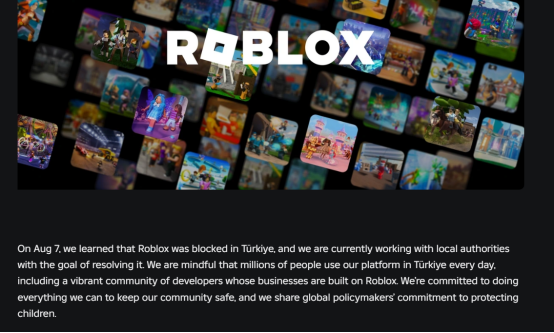
In response to the ban by Turkish authorities, Roblox issued a statement on August 8, 2024:
“On August 7, we were informed that Roblox was blocked in Turkey. We are urgently working to understand the issue and resolve it.” The company further stated:
“We recognize that millions of users in Turkey, including a vibrant developer community whose businesses rely on Roblox, use our platform every day. We are continually working to ensure the safety of our community, and we are committed to child protection, just as we collaborate with policymakers worldwide.”
中文原文

土耳其于本月在全国范围内对 Roblox 实施禁令,理由是该平台缺乏内容监管和安全措施,尤其是缺乏保护儿童的措施。 

此次封杀由土耳其阿达纳第六刑事和平法院处理,法院援引了土耳其《互联网治理法》的相关规定并立即禁止访问 Roblox的产品及相关网站,该法规定如法院裁定网络平台上的内容非法,信息技术和通信管理局局长将有 24 小时的时间来审查该决定。如果决定禁令,则将四小时内予以实施。

截至 2024 年第二季度,平均每天有 7950 万用户玩 Roblox 游戏。这些用户在 Roblox 平台上花费了 174 亿小时,这意味着每位用户每年的花费时间超过 200 小时,或每天约 40 分钟。

虽然未成年人可以在 Roblox 中进行有趣的数字游戏甚至学习基本的编程思路,但同时也可能会浏览到露骨的色情内容、遭受诱骗或网络欺凌。

近年来,Roblox 的安全记录备受批评,几起备受关注的案件表明,犯罪分子经常性利用该平台实施针对未成年人的犯罪活动。据《彭博商业周刊》汇编的数据,自 2018 年以来,美国警方逮捕了至少二十几名涉嫌绑架或虐待通过 Roblox 认识或引诱的受害者的嫌疑人。其中一些人之前已被列入性犯罪者名单,或被指控虐待未成年人;还有一名副警长、一名三年级老师和一名护士。仅在过去 13 个月内,就有 7 人被捕,其中包括一名佛罗里达州男子,他被控试图绑架一名与他一起在 Roblox 上玩游戏的青少年;一名男子被控绑架一名他在该平台上认识的 11 岁新泽西女孩;一名加利福尼亚州男子涉嫌虐待一名他也在 Roblox 上认识的孩子。这些罪犯使用 Roblox 引诱孩子们发送照片或与他们发展关系,然后转移到其他在线平台,最终转移到线下。

土耳其信息和通信技术管理局(BTK)表示,“无法有效监控和监管 Roblox 上的不当内容是做出这一决定的一个关键因素。”它表示,Roblox 公司的“监督机制”不足以解决这些问题,因此实施了禁令。BTK 的一名官员概述了禁令的四个原因:

1.性剥削问题

土耳其Roblox禁令的主要原因是有报道称Roblox上存在涉嫌剥削儿童的性内容。 当局对此类内容的存在及其对年轻用户的影响表示严重关切,因此果断采取了封禁该平台的行动。

2.关于恋童癖的猖獗报道

另一个被提及的因素是该平台的虚拟聚会,这些聚会被指控为恋童癖者的聚集地,这也是土耳其决定禁止访问 Roblox 的原因之一。

3.通过虚拟货币奖励儿童

该官员还强调了 Roblox 虚拟货币“robux”的问题。报告显示,机器人账户正在分发 robux,以鼓励儿童参与可疑活动。此外,在该平台上还可以发现以儿童为目标的掠夺性赌博。这增加了土耳其禁止 Roblox 的理由,反映了BTK对滥用虚拟激励机制的担忧。

4.内容监管方面的挑战

无法有效监督和管理 Roblox 上的不当内容是做出这一决定的关键因素。 该局指出,该平台的监督机制不足以解决所报告的问题,这促使阿达纳首席检察官办公室实施了访问限制。

针对土耳其当局的封禁措施,目前还不清楚Roblox何时会解禁。Roblox于8月8日发表声明:“8 月 7 日,我们得知 Roblox 在土耳其被封锁,我们正在紧急努力了解问题所在,以期解决它。” “我们注意到,每天有数百万人在土耳其使用我们的平台,其中包括一个充满活力的开发者社区,他们的业务依赖于 Roblox。我们一直在思考如何保护我们社区的安全,我们与全球政策制定者一样致力于保护儿童。”

分享文章

相关文章

General

【Weekly Gaming Law】Lawyers Comment on miHoYo’s Anti-Fraud Actions; Infringing “Reskinned” Game Ordered to Pay RMB 5 Million

【每周游戏法】律师评米哈游反舞弊;侵权游卡被判赔500万

This weekly update examines three recent legal developments in the gaming industry: miHoYo’s anti-fraud enforcement and supplier blacklist measures; a “reskin” infringement case involving a Three Kingdoms-themed card game resulting in a RMB 5 million damages award based on unfair competition; and Roblox’s launch of AI-powered interactive content generation tools. The article outlines the legal considerations arising from supply chain compliance, the boundary between public domain materials and protectable game design, and the intellectual property and compliance implications of AI-generated interactive content within UGC platforms.

0 views
General

How to Build Official Game Payment Systems in a Compliant Manner (Part II): Overseas

游戏官方支付如何合规搭建(二)海外篇

Against the backdrop of a global economic slowdown and evolving regulatory scrutiny over major app distribution platforms, an increasing number of overseas-oriented game companies are exploring the establishment of official website top-up platforms to reduce reliance on channel commissions. Building on the prior discussion of platform policies regarding payment redirection and third-party payment access, this article reviews practical cases of official website payment models adopted by several game companies, including their login mechanisms, purchasable content, regional availability, and qualification disclosures. Based on these practices, it outlines compliance considerations that overseas game companies should focus on when constructing official website payment systems, particularly in relation to account management, price display, promotional methods, and refund policy design across different jurisdictions.

5 views
General

EU’s DMA Enforcement Push: Apple and Epic Games Reach Temporary Truce

欧盟DMA强监管,苹果与Epic Games暂时握手言和

Since 2020, Apple and Epic Games have been locked in a global antitrust dispute over App Store policies. While Epic lost its U.S. lawsuit, it continued its resistance through noncompliance, resulting in a developer account ban. However, the dynamics shifted with the EU Digital Markets Act (DMA) coming into force on March 6, 2024. Epic reported that Apple, under pressure from the European Commission, agreed to reinstate its developer account in the EU. The DMA’s provisions, especially Article 5(3) and Article 6(4), require gatekeepers like Apple to allow third-party app stores and payment systems on iOS. Apple’s attempt to ban Epic amid DMA implementation triggered regulatory attention, leading to rapid Commission intervention. This incident not only highlights the DMA’s enforcement teeth but also signals a broader shift in platform governance within the EU. For global developers and digital exporters, especially those dependent on app store distribution, DMA compliance represents a strategic inflection point. Non-compliance risks include fines of up to 10–20% of global turnover, exemplified by the €1.84 billion fine Apple recently faced. As more third-party app stores (e.g., Mobivention, MacPaw) emerge, the EU’s digital market is poised for structural transformation.

4 views